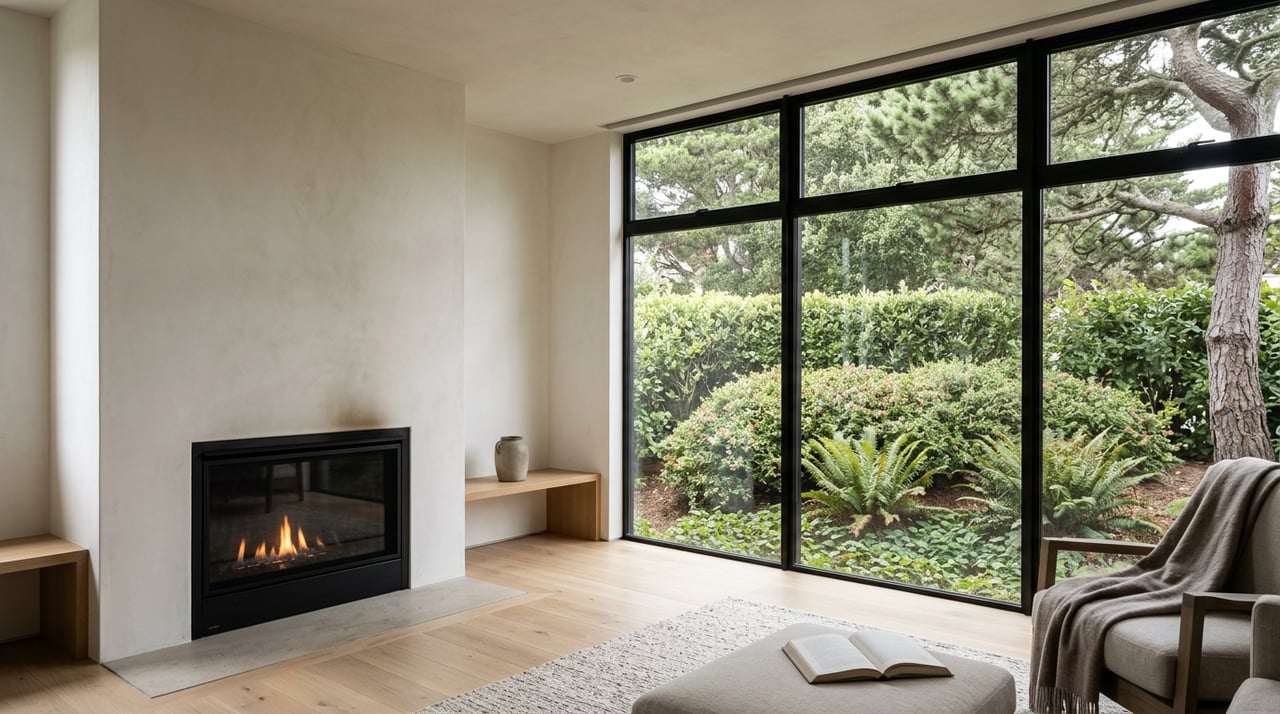
Seaside's Red Line: The Boundary Actually Setting Home Prices in 2026
August 20, 2026
August 20, 2026
A buyer tours a cottage two blocks off the Prom, and the listing sheet includes a line about last year's nightly rental income. It's an appealing number, printed with a straight face, as if it belongs to the house rather than to the person who currently owns it. It doesn't. In Seaside, a short-term rental license is issued to an owner, not a property, and it becomes void the moment the deed changes hands. The buyer inherits the cottage. The rental income is a separate application, a separate inspection, and a decision the city hasn't made yet.
That detail, tucked into Chapter 120 of the Seaside Code of Ordinances, points to something the median sale price can't explain on its own: why two homes a few blocks apart can behave like they belong to entirely different markets this year, with nothing about their square footage or condition having changed. The variable that matters most here isn't the roof or the kitchen. It's which side of a line most out-of-town buyers have never heard of.
Locally, that line has a nickname: the Red Line. It runs along US-101 through town and separates the stretch of Seaside where short-term rentals are permitted, subject to saturation limits, from the stretch where new ones are not allowed at all. West of the highway, in neighborhoods like the Cove, the downtown core along Broadway, and the Promenade corridor between Avenue U and 12th Avenue, a property may qualify as a Vacation Rental Dwelling. East of it, in neighborhoods like Seaside Heights and Blue Heron Pointe, the answer is almost always no.
The boundary isn't a loose description. The city's ordinance draws it block by block, from Edgewood Street west to the ocean shore, along Avenue U east to the Necanicum River, and up Ocean Vista Drive across from the Cove parking lot to the Sailor's Grave. Some condo buildings are excluded even when they sit on the correct side of the highway. There is no substitute for calling the Planning Department and asking about a specific address before writing an offer that assumes rental income.
The current version of this system dates to Ordinance 2024-04, amended by Ordinance 2025-01 in February 2025. That amendment opened a narrow grandfathering window for properties that would have qualified as a Vacation Rental Dwelling before July 11, 2024, letting owners who held the property before that date apply under the old standards. That window ran from March 25 to June 23, 2025, and it has already closed. Anyone buying in Seaside today is working under the current rules, with no legacy path available.
Here's where the line stops being a zoning curiosity and starts showing up in the numbers. In July 2026, Seaside's citywide median list price sat at $539,000, at roughly $348 a square foot. That's a single figure, and like most single figures, it flattens two very different stories into one.
Look at price per square foot by property type instead of by the whole city, and the picture splits. In the most recent week tracked this summer, single-family list prices per square foot in Seaside rose 1.93 percent, while condo list prices per square foot rose 9.38 percent, nearly five times the pace, in the same city, in the same week. On average, single-family homes still cost about $33 more per square foot than condos, but that gap is closing fast, and it's closing from the condo side.
Even the broader trend lines disagree with each other in ways that are themselves informative. One spring 2026 market analysis, built on the same underlying data Redfin publishes, found that Seaside's price per square foot had climbed 12.5 percent year over year even as overall sale prices eased. Redfin's own updated figures for the three months ending May 2026 showed price per square foot down 15.2 percent year over year, with median sale price down 3.0 percent to $525,000 over that window. Two credible reads of the same city, months apart, landing on opposite directions for the same metric. That kind of disagreement isn't a data error. It's what happens when a citywide average tries to describe a market that isn't actually one market. Depending on which month's mix of condo and single-family sales gets sampled, the westside rental-eligible segment can dominate the number or nearly disappear from it.
Days on market tells a steadier story, and that steadiness is itself a clue. Homes listed in June 2026 spent a median of 85 days on the market, essentially unchanged from June 2025. A flat citywide average sitting on top of a fast-moving condo segment and a slower single-family segment suggests the two are offsetting each other, not moving together.
| West of the Red Line | East of the Red Line | |
|---|---|---|
| Example areas | The Cove, downtown core, Promenade corridor | Seaside Heights, Blue Heron Pointe |
| Short-term rental eligibility | Permitted, subject to saturation limits and per-address confirmation | Not eligible for new licenses in most cases |
| Spring 2026 price bands | Condos and townhomes roughly $250,000 to $550,000; oceanfront and Promenade-adjacent homes $800,000 to $3 million-plus | Standard single-family homes roughly $400,000 to $700,000; Necanicum riverfront homes $450,000 to $800,000-plus |
| What sets the price | Rental income potential plus beach proximity | Livability, lot size, and owner-occupant demand |
The reason the westside segment behaves like an income asset rather than a home is baked into how the license works. A short-term rental business license in Seaside is tied to a specific owner and a specific dwelling. The City of Seaside caps occupancy at three times the number of bedrooms.
None of that transfers with the sale. When a licensed property sells, the license goes void, and the new owner starts the application over: a review for completeness, up to thirty days to fix anything missing, then up to 180 days to schedule and pass the city's inspection once the application is deemed complete. A rental income figure printed on a listing sheet describes what the last owner earned under a license that no longer exists.
If the plan is to offset carrying costs with nightly rental income, the only responsible order of operations is to confirm STR eligibility for the exact address with the City of Seaside before making an offer, not after closing. The Red Line runs through the middle of several blocks, and being two doors from the beach doesn't guarantee being on the correct side of it.
If the plan is a full-time home rather than an income property, the east side changes the conversation entirely. Seaside's median household income sits at $45,807, which sits well below what it takes to comfortably carry a local mortgage, and it's a large part of why so much of the owner-occupant demand east of the line comes from people relocating from higher-income markets rather than buying as investors. Homes in Seaside Heights or Blue Heron Pointe aren't competing on rental yield. They're competing on lot size, quiet streets, and proximity to schools and parks, and their price behavior reflects that.
Does the Red Line affect single-family homes the same way it affects condos? Not evenly. Condos cluster more heavily in the STR-eligible zone near the Promenade and downtown, which is part of why their price per square foot has moved faster this year. Single-family inventory is split across both sides of the line, so its pricing reflects a blend of rental-eligible and owner-occupant demand rather than one or the other.
How do I find out if a specific listing is STR-eligible? Confirm directly with the City of Seaside Planning Department. The ordinance boundary is specific down to individual streets, and some buildings are excluded even within an eligible area.
Is Seaside's short-term rental policy likely to change again this year? It's possible. The city adjusted its rules with Ordinance 2025-01 in 2025, and the underlying framework has shifted before. Anyone weighing rental income as part of a purchase decision should verify current status rather than rely on a listing description.
If you're comparing a Seaside condo to a Seaside house, or trying to work out whether a specific address will let you do what you're picturing when you retire there or rent it out, that's the conversation worth having before you write an offer, not after. Jenny Frank has spent 18 years walking these blocks and can tell you which side of a line you're standing on before it costs you anything. Let's Connect.
This article is general information, not legal, tax or financial advice. Consult a qualified professional about your situation.
Stay up to date on the latest real estate trends.

Whether you’re buying or selling along the Oregon Coast, Jenny Frank provides expert guidance, local insight, and personalized service every step of the way.