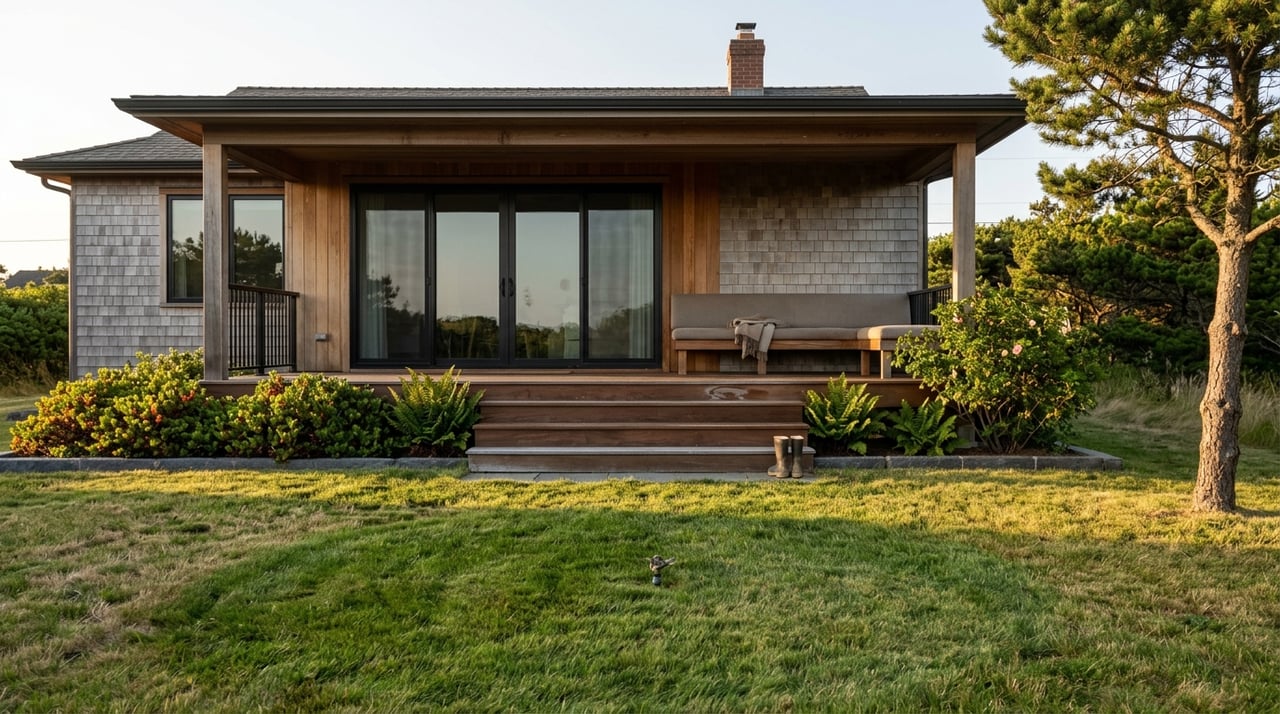
Why Some Gearhart Homes Take Twice as Long to Sell, Even as Prices Climb
August 27, 2026
August 27, 2026
A buyer touring a cottage near Gearhart Golf Links this spring asked her agent a reasonable question: could she rent the place out a few weeks a year to help cover the mortgage, the way the current owner apparently had been doing? The listing photos showed a well-kept guest room, fresh linens, a laminated welcome guide still sitting on the kitchen counter. The answer was no. Not because of price, condition, or zoning in the way most buyers expect. The permit that let the previous owner rent that home dies the moment the sale closes. It does not pass to her, no matter what the seller's rental history shows.
That single fact, easy to miss until you are already under contract, is doing more to shape Gearhart's current market than the headline price numbers suggest.
Gearhart banned new short-term rental permits in residential zones through Ordinance 947 in 2021. Homeowners who already held a valid permit at the time were grandfathered in and can keep renting. But the ordinance drew a hard line at the property line: those permits are tied to the person who held them when the ban took effect, not to the address. Sell the house, and the permit is void. The only way it survives a change in ownership is inheritance.
That detail matters because it means a home currently generating rental income and a home that will generate rental income under new ownership are two very different assets, even if they are the exact same house on the exact same street. A seller can point to years of booking history. A buyer cannot use any of it. The city's own vacation rental page spells this out plainly for anyone who checks before writing an offer.
Most buyers don't check before writing an offer. They check after, usually during due diligence, sometimes not until they call the city to ask how to register.
The 2021 ban wasn't a sudden move. It was the third act in a longer fight.
That vote preserved the 2016 rules. A few years later, the city tightened them further by closing the door on any new permits.
The practical upshot for anyone shopping in Gearhart today: the 2016 rules survived a public vote, and the city has enforced vacation-rental rules for nearly a decade.
Here is where the market data gets interesting, and where a lot of buyers stop reading too early.
Over the three months ending in May 2026, Gearhart's median sale price was $645,000, up 22.9 percent from the same period a year earlier. On its own, that number tells a simple story: hot market, rising prices, get in now.
But average days on market for the same period was 32 days, compared to just 4 days a year prior. That is not a minor slowdown. That is a market where homes that once went pending within a week are now sitting for a month or more, even as the prices that eventually get paid climb higher.
Separately, asking prices tell a slightly different story. Listings tracked in July 2026 showed median price per square foot down 6 percent compared to July 2025, even as days on market held at 67, essentially flat compared to the prior July.
Put those two data sets side by side and a pattern emerges that the median price alone hides completely. Sellers are having to concede more on a per-square-foot basis to attract buyers, and homes are taking longer to find one. But the sales that do close are skewing toward a higher price tier. That is consistent with a buyer pool that has narrowed rather than shrunk uniformly. The properties still selling quickly and at a premium are the ones that make sense on lifestyle terms alone. The properties that used to appeal to a hybrid buyer, someone weighing both personal use and rental income, are now competing for a smaller, more selective audience willing to buy on lifestyle terms only.
That is the mechanism the ordinance created. Not a ban on selling homes. A quiet reduction in who wants to buy certain ones, and how fast they're willing to move.
Buyers who widen their search a few miles in either direction will find Gearhart is the strictest of its neighbors, not the norm.
None of this makes one town better than another. It makes them different products dressed in similar coastal architecture. A cedar-shingled cottage a mile inland in Seaside might carry real rental optionality that an identical-looking home in Gearhart does not, and that difference belongs in the price conversation long before it belongs in a home inspection report.
Before assuming a Gearhart property's rental history means anything for your own plans, a few questions are worth asking directly, ideally before you write an offer rather than after:
For a downsizer or a longtime local seller, this cuts the other way. If your home currently holds a grandfathered permit, that permit has real value to you as long as you hold the property, but it disappears from the sale itself unless a buyer understands they are purchasing the house, not the income stream. Pricing and marketing that reality accurately, rather than letting a buyer discover it during due diligence, tends to produce a smoother close for everyone involved.
Can a lapsed Gearhart permit ever be reissued to someone else? No. Once a grandfathered permit is surrendered, revoked, or voided by a sale, the city does not reissue new ones. The only path that preserves a permit through a change of ownership is inheritance.
Does this affect vacant land if I want to build new in Gearhart? Yes, in the sense that new construction on a residential lot does not come with any inherited rental eligibility. The ban applies to new permits regardless of when the structure was built.
Are commercial-zoned properties in Gearhart treated the same way? No. The residential ban applies to residential zones. Commercial districts and hosted home-sharing arrangements fall under different rules, which is worth confirming directly with the city's planning department for any specific address.
Gearhart's coastline hasn't changed. Its golf course is still the oldest west of the Mississippi, and its beach still runs uninterrupted into Seaside. What has changed is the math behind who buys here and why, and that math now runs through a city ordinance as much as it runs through square footage or ocean proximity.
If you're weighing a Gearhart property against something similar in Cannon Beach or Seaside, or trying to figure out what a seller's rental history actually means for your own plans, Jenny Frank can walk through the permit status, the zoning, and the numbers specific to the address you're considering. Let's Connect before you write an offer, not after.
This article is general information, not legal, tax or financial advice. Consult a qualified professional about your situation.
Stay up to date on the latest real estate trends.


Whether you’re buying or selling along the Oregon Coast, Jenny Frank provides expert guidance, local insight, and personalized service every step of the way.