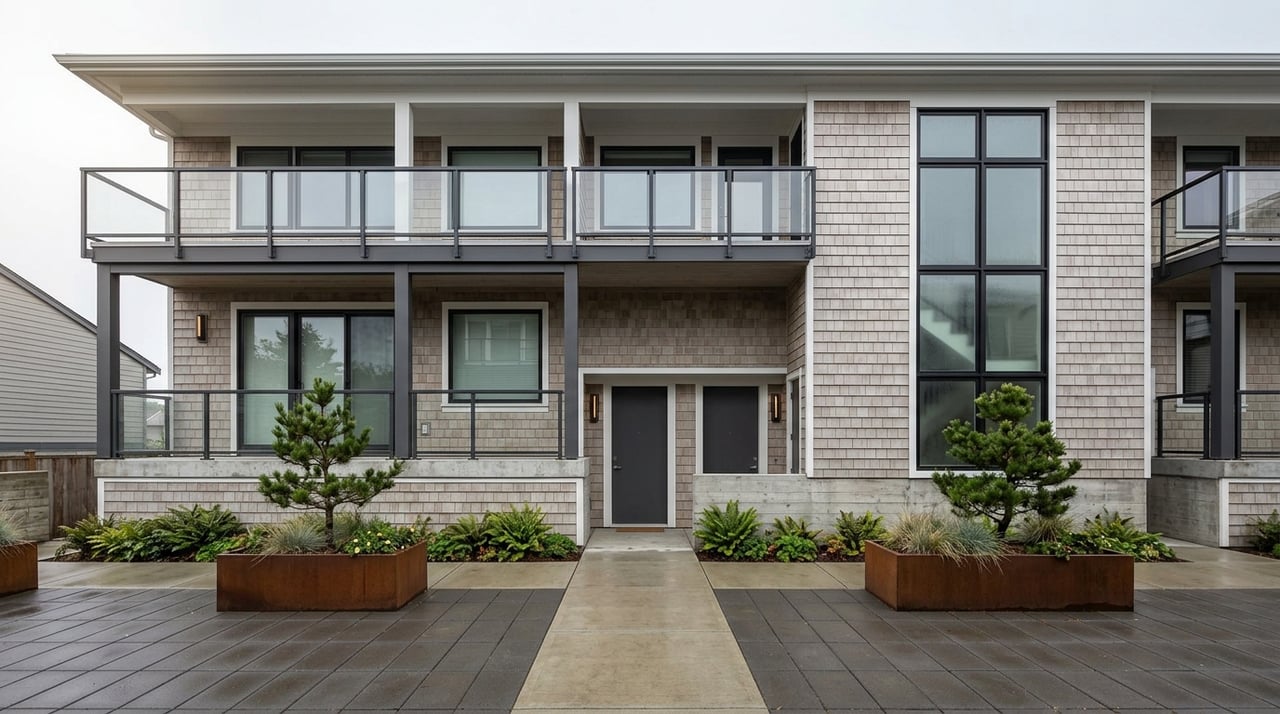
Understanding The Seaside Condo Market On The North Coast
May 28, 2026
May 28, 2026
If you are thinking about buying or selling a condo in Seaside, one number will not tell you the whole story. This is a small coastal market where beach access, views, HOA strength, rental rules, and even flood-map position can shape value in a big way. When you understand those moving parts, you can make a smarter decision and feel more confident about your next step. Let’s dive in.
As of late May 2026, public listing portals show a relatively small but varied condo market in Seaside. Redfin shows 14 condos for sale with a median listing price of $349,000.
That said, the broader Seaside market looks different from the condo slice alone. Redfin’s citywide market page shows a March 2026 median sale price of $419,000 across all home types and a median 51 days on market, while its condo page says most homes for sale in Seaside stay on the market 141 days. For you, that suggests condos may move more slowly than the overall local market.
In Seaside, condo pricing is highly building-specific and unit-specific. Current listings range from a 278-square-foot one-bedroom Tradewinds condo on the North Prom at $185,000 to larger South Prom and 15 Avenue units priced above $1 million.
That spread shows why it helps to look beyond a citywide average. In this market, price often reflects a mix of view, direct beach access, unit size, building quality, and location within the building.
You will see several different condo product types in Seaside, and each tends to attract a different kind of buyer.
Units on the North Prom and South Prom often carry a pricing premium. Current examples include active listings at $185,000, $529,000, and $1.095 million, which highlights how much direct shoreline access and stronger views can matter.
Beach Drive remains an important beach-adjacent condo corridor in Seaside. Active listings there show another option for buyers who want coastal proximity without always paying top oceanfront pricing.
Some of the lower-priced inventory includes compact condos away from the Prom. Current Avenue U listings show how smaller floor plans can create a more accessible price point for buyers who want a Seaside foothold.
Seaside also includes larger condo options for buyers who want more square footage and a premium location. A current 15 Avenue listing at $1.175 million for 2,185 square feet is one example of that upper end.
In Oregon, a condominium is a legal ownership form, not just a style of property. You own your individual unit plus an undivided interest in the common elements, and the declaration, plat, and bylaws define owner rights and responsibilities.
Those common elements can include structural parts of the building, roofs, stairways, utility services, landscaping, and parking areas. Because those areas are shared and managed through the association, condos are often appealing to buyers who want a more simplified maintenance setup than a detached home.
Seaside’s location helps explain a lot about condo demand. The city describes Seaside as one big beachfront with access points throughout town, and the historic Promenade runs about 1.5 miles along the shore.
That broad beach access is part of what makes the area attractive to full-time residents, second-home buyers, and weekend users. It also helps explain why Prom-front, oceanfront, and beach-adjacent condos tend to command stronger prices in the active listing pool.
Still, there is a difference between being near the beach and being directly on it. If you are comparing condos, it helps to ask whether you value frontage, view, walkability, or a lower price point most.
Owning near the coast can be appealing, but it also comes with important due diligence items. In Seaside, those should be part of your condo search from the start, not an afterthought.
DOGAMI identifies several coastal hazards that affect Oregon beach communities, including erosion, sliding, flooding in low-lying areas during major storms, and tsunamis. The City of Seaside warns that local tsunamis can arrive within about 20 minutes after shaking starts.
That makes map position and evacuation planning important parts of condo ownership. If you are buying, it is smart to verify flood status, elevation context, access to high ground, and local evacuation routes before you write an offer.
Clatsop County notes that special flood hazard areas are subject to National Flood Insurance Program rules and permit review. Its flood-hazard information also says flood insurance typically takes about 30 days to become effective.
The City of Seaside directs buyers to check Clatsop County web maps and FEMA floodplain layers when reviewing zoning and flood status. For you, that means flood mapping is not something to assume based on address alone.
Many buyers are drawn to Seaside because of its long-standing tourism appeal and year-round beach access. That can create interest in low-maintenance second homes and condos that may have vacation-rental potential.
But not every condo can be used as a short-term rental. The City of Seaside regulates short-term rentals through its business-license ordinance, with supported areas, density limits, waiting periods after sale for non-licensed properties, a two-year waiting period from certificate of occupancy for new applications, and a one-license-per-owner rule.
The city also notes that support levels vary by location. Oceanfront and RR-zone properties are supported at 100%, while some R2, R3, and Beach Drive areas have lower supported percentages.
On top of city rules, condo-level restrictions also matter. If rental use is important to you, review both the local rules and the HOA documents before moving forward.
In Seaside, two condos with similar square footage can feel very different once you look at the association details. Oregon law makes HOA document review especially important for condo buyers.
State law requires associations to maintain reserve accounts, conduct annual reserve-study updates, prepare maintenance plans, and keep association records. Associations with annual assessments over $75,000 must also have financial statements reviewed by an independent Oregon CPA.
For you, that means the HOA is not just background paperwork. It can affect future costs, special-assessment risk, building upkeep, and overall confidence in the purchase.
Before making an offer, it is wise to review:
Each building can tell a different story. A well-run association with solid reserves may support value more effectively than a similar unit in a building with deferred maintenance or tighter financial pressure.
If you are selling a condo in Seaside, buyers are likely looking closely at more than finishes and photos. They often want clarity around the details that affect day-to-day use and long-term ownership.
In this market, seller strategy is often shaped by beach access, view quality, floor level, parking, HOA dues, reserve strength, rental eligibility, and hazard-map position. The more clearly those points are presented, the easier it can be for a buyer to understand your property’s value.
Pricing also needs a careful, local lens. Since Seaside condos range from compact units under 450 square feet to larger homes over 1,600 square feet, broad averages rarely tell the full story.
The biggest takeaway is simple: Seaside condos should be evaluated one by one. Citywide numbers can provide context, but they do not replace building-level and unit-level analysis.
If you are buying, compare the condo’s location, access, HOA health, rental rules, and hazard exposure alongside price. If you are selling, make sure your pricing and marketing reflect the specific features that make your unit stand out in a small, mixed inventory pool.
With a market this nuanced, local guidance can make a real difference. If you are thinking about buying or selling a condo in Seaside, Jenny Frank offers clear guidance, strong local insight, and a steady approach that helps you move forward with confidence.
Stay up to date on the latest real estate trends.

Whether you’re buying or selling along the Oregon Coast, Jenny Frank provides expert guidance, local insight, and personalized service every step of the way.